
30+ hours. One bow.
"Every bow is built by hand in Conroe, Texas. There are no shortcuts."
The Process
Raw Material Selection
We begin with the hunt for the exceptional. Only one in a thousand boards meets the structural and aesthetic requirements for an Imperator riser.

Wood Surfacing
Lumber is brought to dimension with surgical precision. Every surface is trued to ensure a perfect bond during the lamination phase.

Lamination Preparation
The core materials and veneers are prepared. This is where the structural integrity of the limbs is established through careful layering.

Form Layup
The bow is assembled on a custom form. Every layer is coated in high-performance epoxy and positioned to within a fraction of a millimeter.

Press and Cure
Under immense pressure and controlled heat, the bow becomes a single composite structure. The curing process is monitored for absolute consistency.

Limb Profiling
The rough shape is carved away to reveal the bow. This stage requires an intimate understanding of wood grain and mechanical stress.

Tillering & tuning
Each bow is tillered by hand. We adjust the limb geometry until the draw is perfectly linear and the release is silent.

Finishing
The final aesthetic refinement. ML Campbell Krystal instrument-grade finish is elegantly atomized through a Fuji Q4 HVLP turbine system ensuring perfect, even protection across the entire profile.


Exotic Hardwoods
Museum-Grade Grain Character · Riser (Handle)
The soul of an Imperator bow begins with the selection of world-class exotic hardwoods. Each species earns its place differently — Desert Ironwood and Osage Orange for their extraordinary density and structural integrity, Buckeye Burl and Mexican Kingwood for grain character that cannot be replicated. Every riser blank is hand-selected for its figure, its weight, and its feel in the hand. The result is exceptional vibration dampening and a natural canvas that exists in this bow alone.
The finest materials available. Not the ones that simply work.

Gordon Glass
Fiberglass Laminate · Outer Layers
Gordon Glass fiberglass is the benchmark against which all bow laminates are measured. Applied to the belly and back of each limb, it provides the tensile and compressive strength that allows the limb to cycle thousands of times without fatigue or delamination.
01 / 06
Grip Materials
The grip is where the archer and the bow become one. The material chosen for that junction is not incidental.
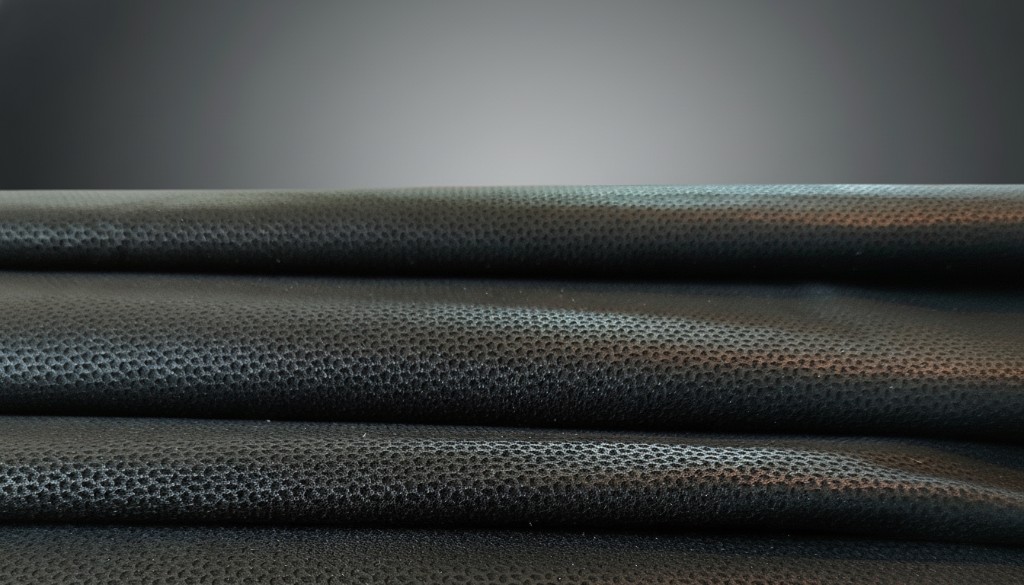
Italian Kangaroo Leather
The Heritage Commission
Sourced from Italy, kangaroo leather carries the highest tensile strength of any natural leather — stronger pound-for-pound than cowhide at a fraction of the thickness. Where conventional grip wraps compress and shift under sustained draw pressure, kangaroo leather holds its position with absolute consistency. It conforms to the hand over time without losing structure, developing a fit that belongs to one archer and no other.
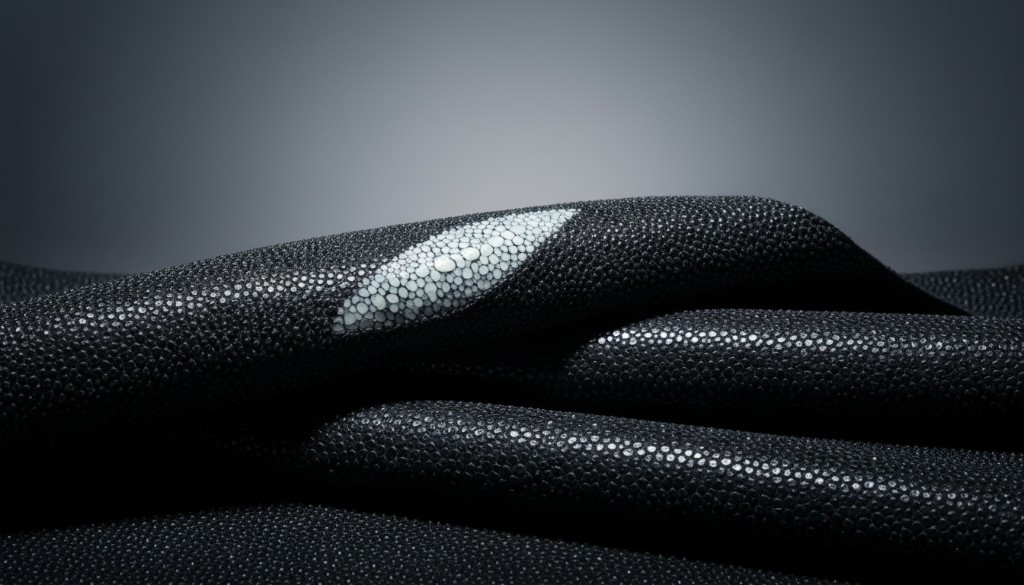
Stingray Leather
The Heirloom Commission
Stingray skin has covered the hilts of Japanese katana and European swords for centuries — chosen for the same reason it belongs on an Imperator grip. The natural bead structure of the hide creates a surface that does not move in a wet hand, a cold hand, or a hand that has drawn ten thousand times. It does not compress. It does not slip. It does not age into softness. The texture is immediately distinctive — hardened, precise, and unlike any other grip material in traditional archery. Reserved for the Heirloom tier, where every detail is chosen to last beyond the archer who commissioned it.
The Form
The limb profile of every Imperator is drawn from a 41-point coordinate system developed in house. The deflex-reflex geometry stores energy efficiently and releases it smoothly — built to perform at full draw and last beyond the archer who draws it.

The final layers of every Imperator
The final layers of every Imperator are built with ML Campbell Krystal, atomized through a Fuji Q4 HVLP turbine system. Where conventional spray equipment forces finish under high pressure — creating overspray, orange peel, and inconsistent film build — the Fuji system moves finish at high volume and low pressure, laying each coat down with a softness that eliminates surface disturbance entirely. The result is a finish that looks like it was grown on the wood, not applied to it. What you see is the grain. What protects it is invisible.
